

Phone

+237679870005

Email

info@multicommedia237.com

The Power of Visual Storytelling in Digital Marketing

In today’s digital landscape, traditional marketing methods alone are no longer enough to captivate and engage audiences. Enter visual storytelling – a powerful technique that combines compelling visuals with narratives to create an emotional connection with consumers. In this article, we will explore the profound impact of visual storytelling in digital marketing and how it can elevate your brand’s message.

Visual storytelling transcends language barriers and communicates messages in a universal way. By leveraging the power of visuals, brands can evoke emotions, spark curiosity, and leave a lasting impression on their target audience. Whether it’s through captivating images, engaging videos, or interactive infographics, visual content has the ability to convey complex ideas and messages in a digestible and memorable format.

One key aspect of visual storytelling is branding. Consistency in visual elements, such as color schemes, typography, and imagery, helps establish a strong brand identity. By employing consistent visuals across various marketing channels, brands can reinforce their message, enhance brand recognition, and foster a sense of trust and loyalty among consumers.

Furthermore, the rise of social media platforms has made visual storytelling even more essential. Brands can leverage platforms like Instagram, Pinterest, and YouTube to share visually appealing content and engage with their audience on a deeper level. Social media allows for greater interactivity, enabling users to like, comment, and share visual content, thus increasing brand visibility and reach.

Conclusion:

In the fast-paced world of digital marketing, visual storytelling has emerged as a powerful tool to capture the attention and hearts of consumers. By incorporating compelling visuals into your marketing strategy and staying true to your brand’s narrative, you can create a memorable and impactful experience for your audience, fostering stronger connections and driving business growth.
Leave a Reply

Your email address will not be published. Required fields are marked *

Latest Update

'' AFRICA IN MINIATURE"
Uncategorized
Nfor Tracy

The Realm of African Traditions

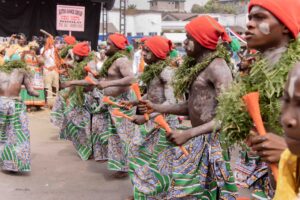
Before the arrival of modern civilization in Africa, people lived quiet lives rooted in traditions that carried deeper meanings. Africa possesses one of the oldest and most diverse cultural systems in the world, grounded not only in spirituality but also in centuries of unwritten history, community values, and artistic expression. Across the continent, more than a thousand traditions shape the identity of each clan. Though similar in nature, they serve different purposes and hold unique meanings. From North to South, East to West, African culture remains the force that binds communities together. Among the many nations that embody this heritage is Cameroon, often described as “Africa in Miniature.” Cameroon stands out as a mosaic of cultures, with about 250 to 300 ethnic groups and more than 300 languages. Examples include Akoose, Gbaya, Fula, Koonzime, Mundang, Ngiemboon, Ewondo, Bassa, Bamileke, Duala, and Arabic, among many others. Cameroon is divided into ten regions, each dominated by distinct ethnic groups. These regions express their unique cultures through food, traditional regalia, music, ceremonies, and festivals. Historically, societies were organized into kingdoms, chiefdoms, and clan systems, and cultural practices were widely celebrated without misjudgment. This changed with the arrival of colonial powers in the 19th century. Cameroon became a German colony in 1884. After Germany’s defeat in World War I, the territory was divided between France and Britain under League of Nations mandates. Colonial rule introduced Christianity, Western education, and European administrative systems. Missionary schools replaced traditional learning systems and promoted literacy in European languages. As a result, French and English became the official languages. Colonial architecture, dress styles, and religious practices gradually blended with indigenous customs. After independence in 1960 and reunification in 1961, Cameroon experienced a cultural revival. Music became a powerful expression of identity—Makossa, popularized by artists like Manu Dibango, brought Cameroonian rhythms to the global stage. Similarly, Bikutsi, introduced by the Beti people, modernized traditional sounds with electric instruments and urban influences. Today, Cameroonian culture continues to evolve under the influence of globalization and technology, yet it remains deeply rooted in its traditions.

Read More »
Uncategorized
Nfor Tracy

WILL MOFOR JEREMIAH TAKE THE THRONE THIS YEAR?

  Mofor Jeremiah an indigene from Dibanda mile 14 has been on the lime light recently, following his debut at the 29th edition of the Mount Cameroon test Race, men’s category in Buea on January 18, 2024. Mofor emerged the second athlete on the submit after several struggles. This year makes it the third year Mofor has claimed the thrown of the Mount Cameroon test run, gaining recognition as one of the Mountains most consistent performers. The big question that comes to mind is if he will emerge winner of the Mount Cameroon race of Hope given his consistent wins at the test run level. Meanwhile, the Mount Cameroon Race of Hope, which started in 1973, was originally called the Guinness Mount Cameroon Race due to the unconditional support of the Guinness Company. The success of the maiden edition strengthened the event, which was later made an annual competition. The race has evolved over time, bringing together people from different parts of Cameroon. John Ekema, a native of Fako, won the first trophy in 5 hours and 7 minutes. His success encouraged other indigenes to participate, leading to more championship titles. Notable athletes include David Ngu Njumbe, Ndumbe Evambe, Ndive Simon, Monyonge Gobina, and Reginald Esuka, who competed in the prestigious event between 1973 and 1988. Over time, the race, which was once an inter-regional event, gained international recognition, attracting foreign athletes from around the world during its first decade. Stifter Walter, a British-born citizen, took the race to another level by becoming the first athlete to win the competition three times in a row between 1978 and 1985. As days turned into years and season into seasons, the Mount Cameroon Race of Hope took a different turn. In the early 1990s, the finishing point, which was initially at the Buea Town Stadium, was moved to the Molyko Omnisport Stadium. This change also marked a shift in the dominance of the race. While Fako natives had long ruled the men’s category, athletes from the North West Region gradually took over and went on to outshine competitors from other regions at the top level. It is important to note that Reginald Esuka remains the last Fako-born athlete to win the men’s category of the race, a feat he achieved in 1988, 38 years ago. Since then, athletes from the North West Region have remained at the helm, dominating the competition for decades. On the other hand, the women’s category, which was introduced in 1982, has seen notable success from Fako athletes. Four women from the region have stood out over the years: Mojoko Ngondja, Njie Awelisane, Embelle Efonge, and Sarah Liengu Etonge. Among them, Sarah Etonge is the most recent Fako-born winner, having claimed victory. That same year, 2005, the organization of the competition was taken over from Guinness and handed to twelve local committees in Buea, alongside representatives of the Cameroon Athletics Federation (CAF) and the Ministry of Sports and Physical Education. This transition also led to a change in name, from the Guinness Mount Cameroon Race to the Mount Cameroon Race of Hope. Fast forward to the 31st edition of the Mount Cameroon Race of Hope 2026, preparations are already underway, with just a few days to the event, which will take place in Buea on February 21, 2026. The test race conducted to select participants for this year’s edition has already been completed. Mofor Jeremiah emerged winner in the male category, followed by Johannes Moka in second place and Fiemoh Vitalis in third. In the female category, Fai Joyce finished first for the second consecutive time. She was closely followed by Lenjo Zalihatu in second place and Chiebe Laura in third. This year’s test race was unique compared to previous editions, as cash prizes were introduced to motivate athletes to participate. Winners in both the male and female categories received a cash prize of 100,000 FCFA, along with a trophy.  

Read More »