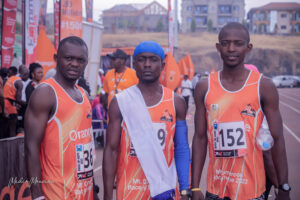
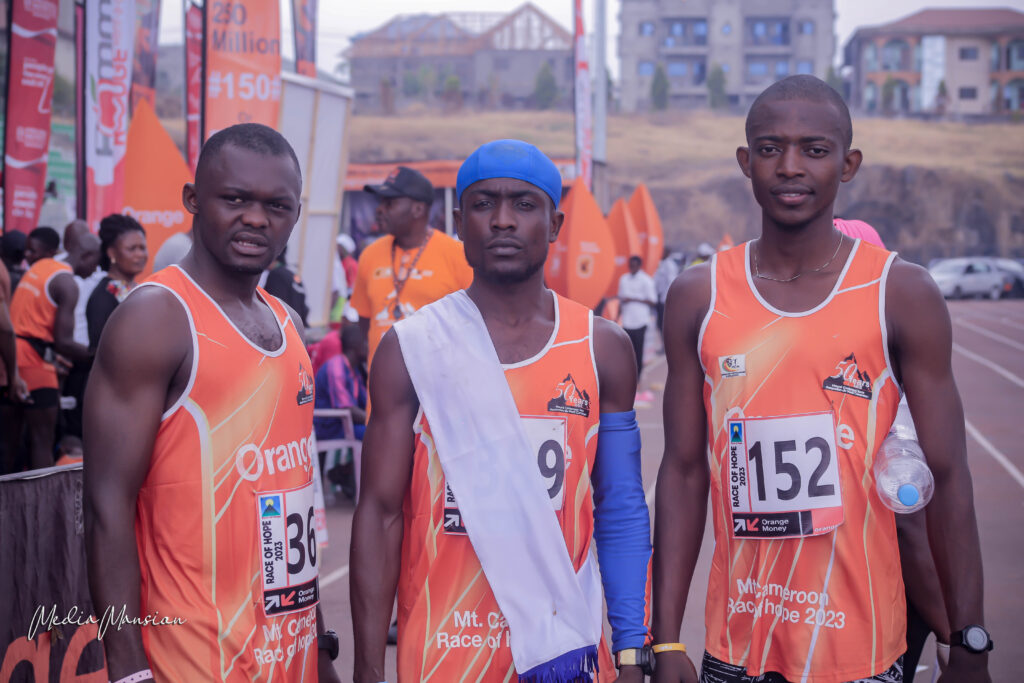
Mofor Jeremiah an indigene from Dibanda mile 14 has been on the lime light recently, following his debut at the 29th edition of the Mount Cameroon test Race, men’s category in Buea on January 18, 2024. Mofor emerged the second athlete on the submit after several struggles.
This year makes it the third year Mofor has claimed the thrown of the Mount Cameroon test run, gaining recognition as one of the Mountains most consistent performers. The big question that comes to mind is if he will emerge winner of the Mount Cameroon race of Hope given his consistent wins at the test run level.
Meanwhile, the Mount Cameroon Race of Hope, which started in 1973, was originally called the Guinness Mount Cameroon Race due to the unconditional support of the Guinness Company. The success of the maiden edition strengthened the event, which was later made an annual competition.
The race has evolved over time, bringing together people from different parts of Cameroon. John Ekema, a native of Fako, won the first trophy in 5 hours and 7 minutes. His success encouraged other indigenes to participate, leading to more championship titles. Notable athletes include David Ngu Njumbe, Ndumbe Evambe, Ndive Simon, Monyonge Gobina, and Reginald Esuka, who competed in the prestigious event between 1973 and 1988.
Over time, the race, which was once an inter-regional event, gained international recognition, attracting foreign athletes from around the world during its first decade. Stifter Walter, a British-born citizen, took the race to another level by becoming the first athlete to win the competition three times in a row between 1978 and 1985.
As days turned into years and season into seasons, the Mount Cameroon Race of Hope took a different turn. In the early 1990s, the finishing point, which was initially at the Buea Town Stadium, was moved to the Molyko Omnisport Stadium. This change also marked a shift in the dominance of the race. While Fako natives had long ruled the men’s category, athletes from the North West Region gradually took over and went on to outshine competitors from other regions at the top level.
It is important to note that Reginald Esuka remains the last Fako-born athlete to win the men’s category of the race, a feat he achieved in 1988, 38 years ago. Since then, athletes from the North West Region have remained at the helm, dominating the competition for decades.
On the other hand, the women’s category, which was introduced in 1982, has seen notable success from Fako athletes. Four women from the region have stood out over the years: Mojoko Ngondja, Njie Awelisane, Embelle Efonge, and Sarah Liengu Etonge. Among them, Sarah Etonge is the most recent Fako-born winner, having claimed victory.
That same year, 2005, the organization of the competition was taken over from Guinness and handed to twelve local committees in Buea, alongside representatives of the Cameroon Athletics Federation (CAF) and the Ministry of Sports and Physical Education. This transition also led to a change in name, from the Guinness Mount Cameroon Race to the Mount Cameroon Race of Hope.
Fast forward to the 31st edition of the Mount Cameroon Race of Hope 2026, preparations are already underway, with just a few days to the event, which will take place in Buea on February 21, 2026.
The test race conducted to select participants for this year’s edition has already been completed. Mofor Jeremiah emerged winner in the male category, followed by Johannes Moka in second place and Fiemoh Vitalis in third. In the female category, Fai Joyce finished first for the second consecutive time. She was closely followed by Lenjo Zalihatu in second place and Chiebe Laura in third.
This year’s test race was unique compared to previous editions, as cash prizes were introduced to motivate athletes to participate. Winners in both the male and female categories received a cash prize of 100,000 FCFA, along with a trophy.